
Injection molding FAQAsk by requirement
Injection molding answers for better program decisions
Find direct guidance on part design, tooling, resin selection, cleanrooms, process control, inspection, and the information that helps a molding team evaluate your program.
Molding fundamentalsProcess + economics
How injection molding works, when it fits, and what drives cost
Injection molding becomes most economical when a stable process can repeatedly turn a purpose-built mold into the required part volume and quality level.
How does injection molding work?
Choose a stage to follow material through one molding cycle.

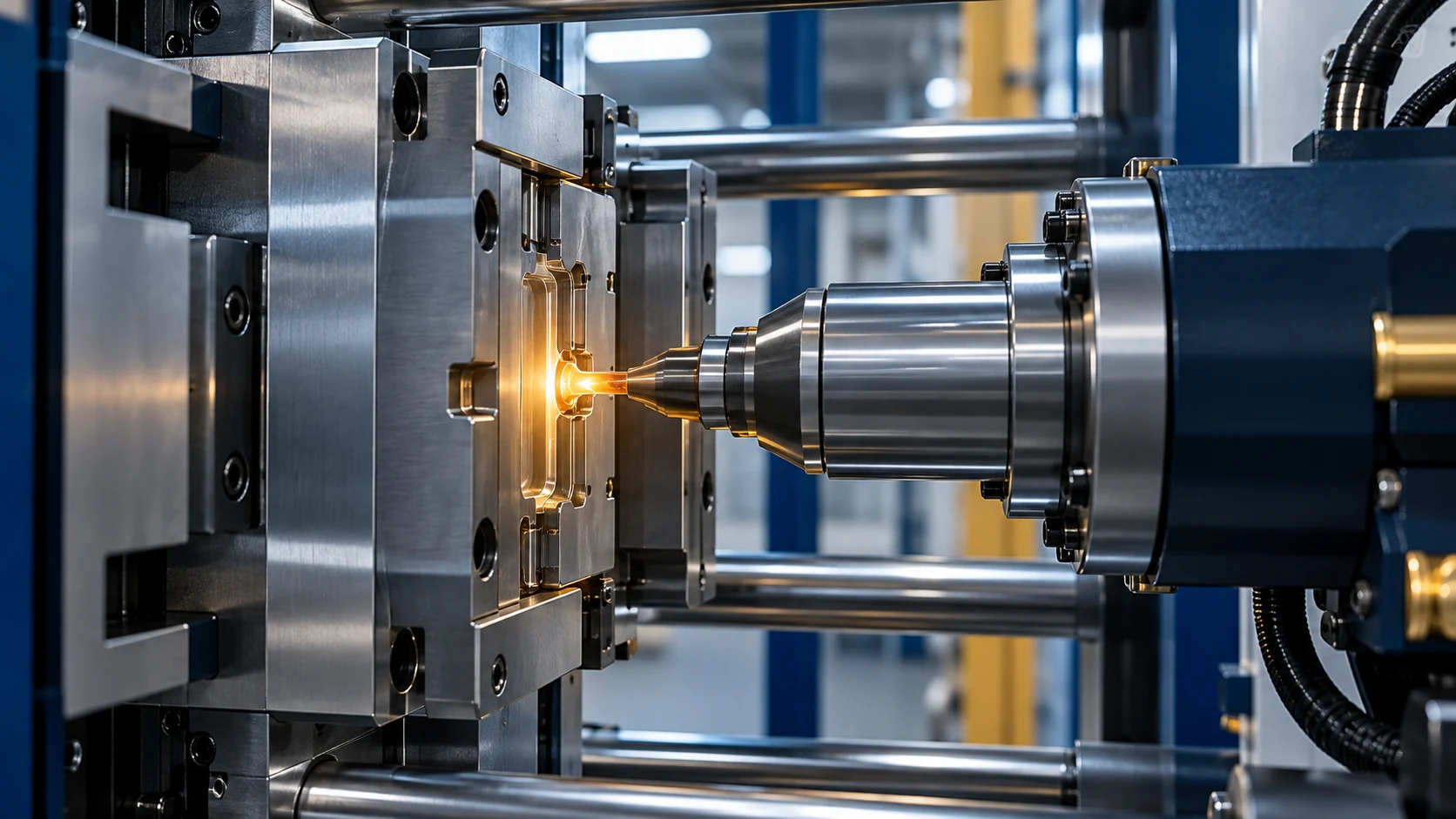
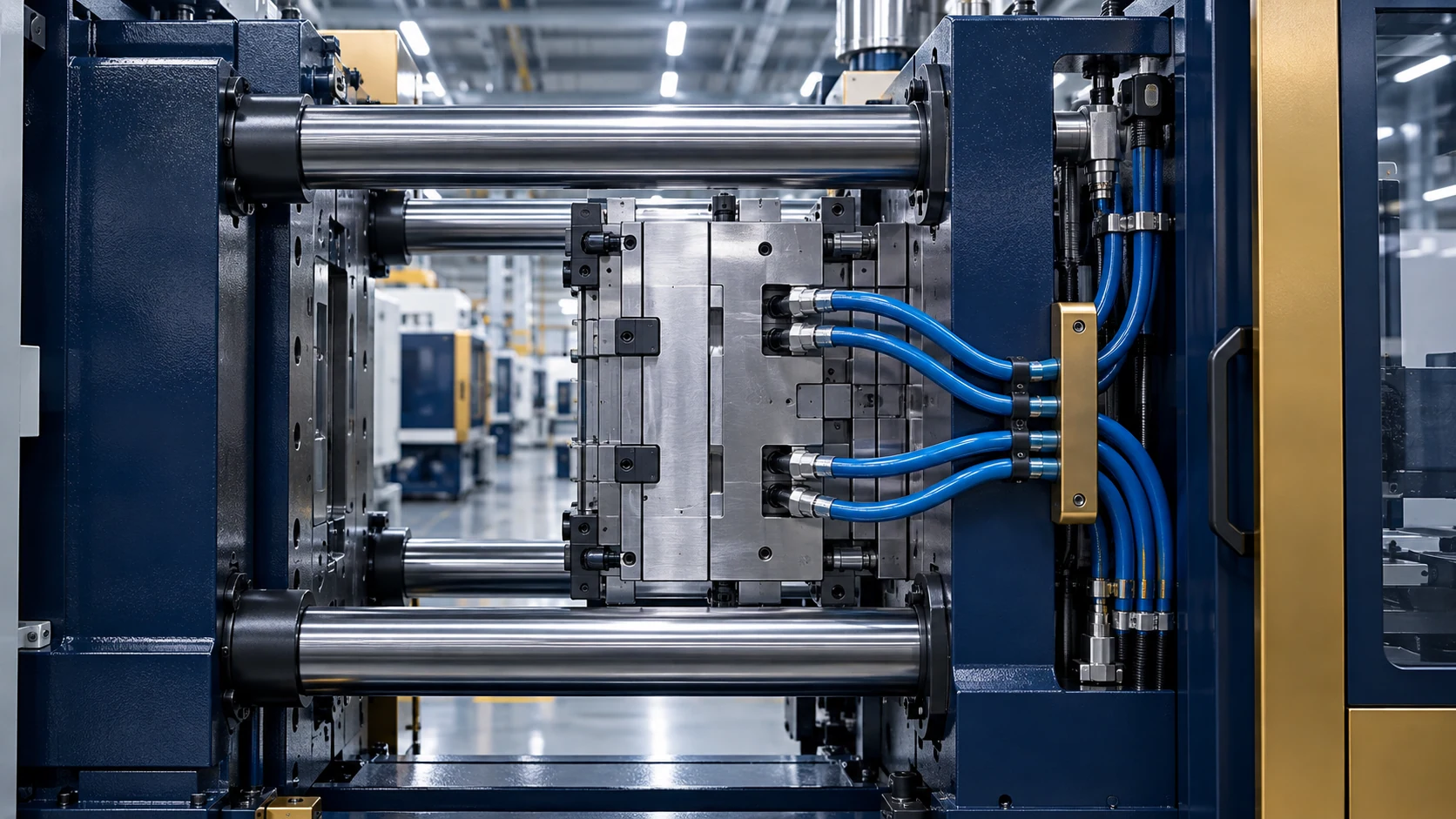
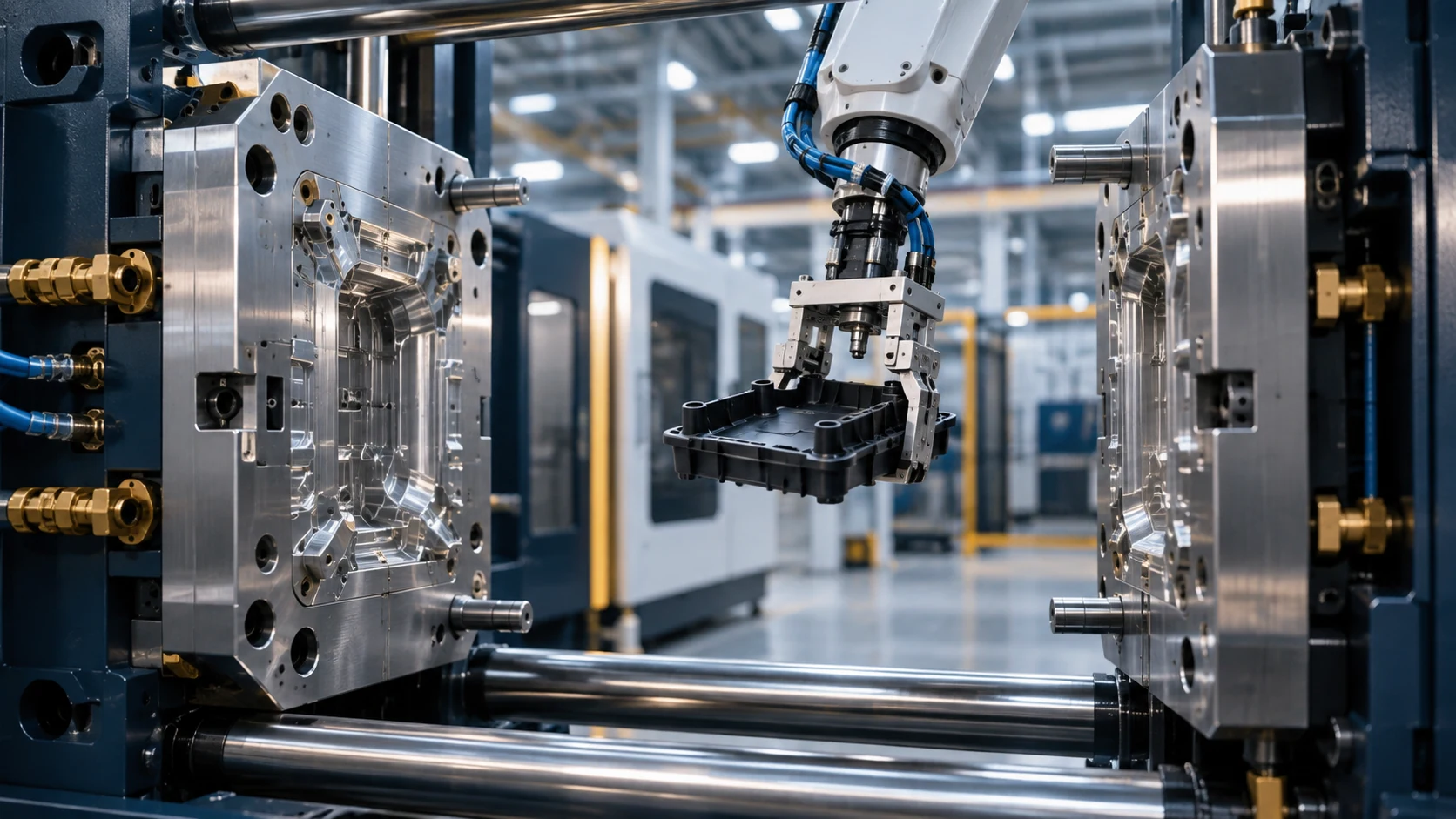
Resin pellets are conditioned as required, fed into the barrel, and plasticized into a consistent melt before the shot moves toward the mold.
The machine drives molten polymer through the nozzle, runner, and gate so it follows the tool geometry and forms the component.
Controlled pressure compensates for material shrinkage while the mold removes heat and the part becomes dimensionally stable enough to release.
The mold opens, ejector or robotic handling removes the part, and the controlled cycle begins again for repeat production.
Custom injection molding uses a mold engineered for one customer’s component and requirements. It is suited to repeat production of detailed thermoplastic parts, and the customer typically owns the dedicated tooling under terms defined for the program.
Explore custom injection molding3D printing is useful for prototypes and very small quantities because it avoids production tooling. Injection molding generally becomes the stronger route when recurring volume, production materials, repeatable dimensions, cycle time, surface quality, and lower unit cost justify the mold investment.
Review early engineering supportMaterial type and usage, cycle time, annual volume, cavity count, press size, labor, automation, inspection, scrap risk, assembly, packaging, and logistics all influence unit economics. A useful estimate begins with the complete production requirement—not geometry alone.
Share a program briefDesign + tooling questionsDecide before steel
What to know about DFM, mold cost, ownership, and tooling support
Part geometry, material behavior, mold architecture, cooling, ejection, automation, and inspection should be reviewed as one production system.
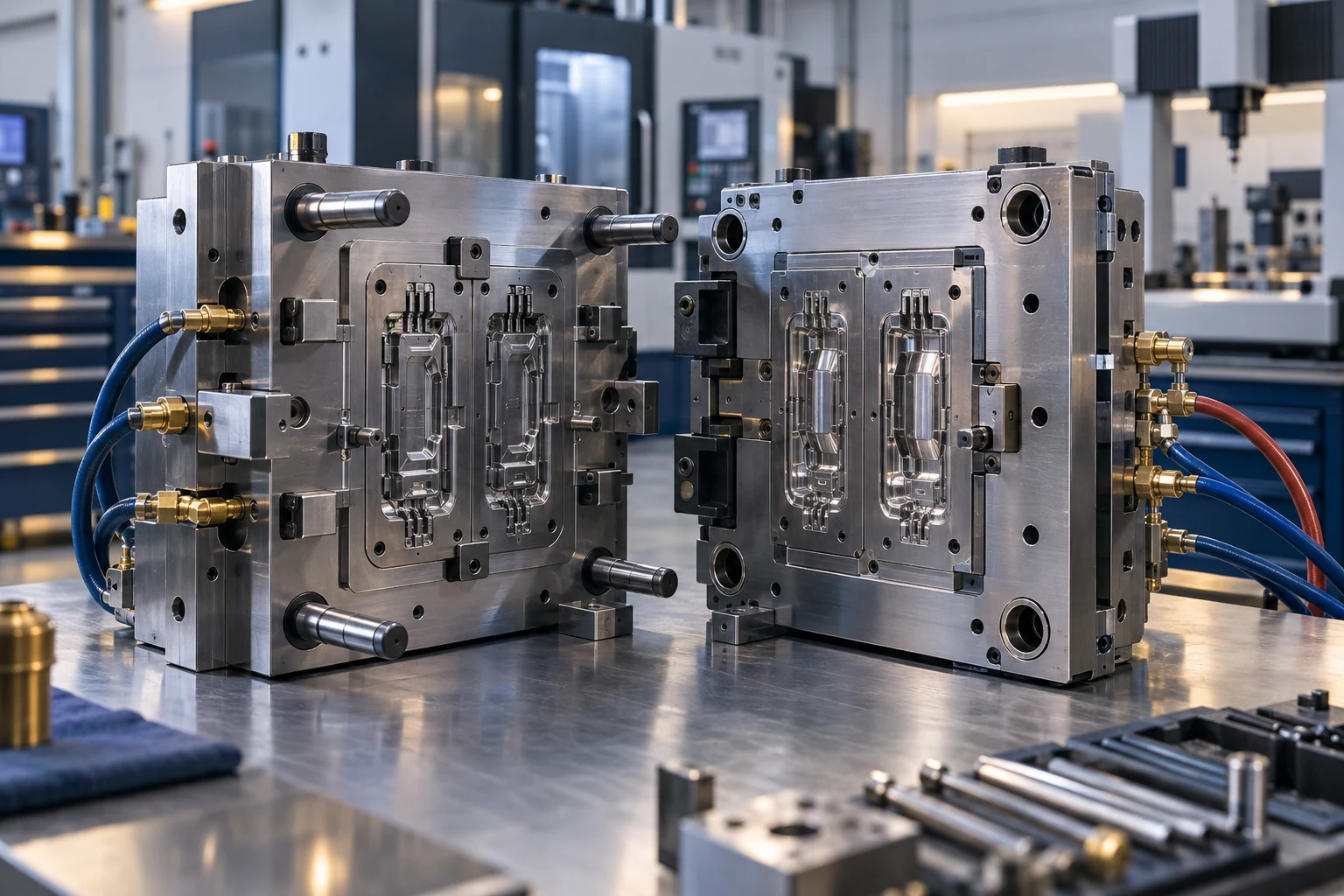
Tool material, part size and complexity, cavity count, tolerances, surface finish, actions such as slides or lifters, cooling strategy, inspection requirements, expected tool life, and qualification scope all matter. A mold quote should be tied to the intended production plan.
Explore in-house tooling supportDesign for manufacturability connects wall thickness, draft, radii, ribs, bosses, undercuts, gates, ejection, tolerances, material behavior, and inspection access. Resolving those relationships before steel reduces rework and protects launch timing.
See Engineering & DFM SupportIn custom molding, dedicated tooling is typically owned by the customer who funds it. Ownership, storage, maintenance, preventive-care expectations, insurance, transfer conditions, and end-of-program responsibilities should be documented in the commercial agreement.
Ask about a tooling programA nearby toolroom shortens the path between a production issue and corrective work. Preventive maintenance, cleaning, repair, engineering changes, and documented tool history help protect uptime, part consistency, and the life of the customer’s asset.
Review tool lifecycle supportMaterials + productionMatch the service condition
How resin choice, press capability, and service conditions work together
Temperature, chemicals, wear, load, moisture, appearance, regulatory needs, dimensional behavior, and cost all influence the right material and production path.
Begin with service conditions and required performance, then evaluate processability, geometry, availability, color, reinforcement, regulatory status, cost, and validation needs. The resin grade, mold design, drying, mold temperature, and process window must work together.
Review engineering resin expertiseYes. Infinity’s established experience includes difficult geometries and engineering-grade thermoplastics, including high-heat families that may require controlled drying, elevated barrel temperatures, hot-oil mold-temperature systems, and a defined scientific process window.
Explore high-heat moldingServo-driven electric motion supports precise, repeatable control of machine movements while using energy when motion is required. It also avoids hydraulic oil at the press, supports a cleaner production environment, and integrates well with robotic handling and process monitoring.
See the all-electric molding platformInfinity’s all-electric platform spans 55 to 500 tons across its focused facilities. Proper press selection depends on projected area, required clamp force, shot size, material, mold dimensions, tie-bar spacing, automation, and process needs—not part dimensions alone.
Open the capability sheetCleanroom questionsControl + terminology
What cleanroom classifications and controls mean for your molded product
Cleanliness classification, air handling, monitoring, gowning, material movement, assembly, packaging, and quality procedures together define the manufacturing environment.
Airborne particle concentration is measured against a defined classification standard.
The molding process operates inside the classified environment under documented controls.
A clean production room without the same independently defined particle-class requirement.
Cleanroom molding places the injection molding process inside a controlled environment designed to limit airborne contamination. It is commonly used for medical and other sensitive components whose cleanliness and handling requirements exceed those of general manufacturing.
See cleanroom molding & assemblyISO Class 8 is an airborne-particle cleanliness classification, historically associated with Class 100,000 terminology. It defines particle concentration limits and verification practices; it does not by itself mean a product is sterile.
Review certifications and standardsA cleanroom is operated and verified to a defined airborne-particle classification. “White room” generally describes a cleaner controlled workspace whose conditions are defined by the owner rather than a formal particle class. Product requirements determine which environment is appropriate.
Explore medical manufacturing requirementsInfinity’s dedicated ISO Class 8 facility supports robot-equipped all-electric molding, assembly and subassembly, pad printing, inspection, and on-site particle-count monitoring. The complete cleanroom air volume is exchanged every 50 seconds.
Review the complete cleanroom platformQuality + supplier fitEvidence before promises
How certification, validation, inspection, and release evidence connect
A capable molding partner should be able to explain how design intent becomes a controlled process, how output is measured, and how the approved method is maintained.
Define critical features, material identity, application conditions, and acceptance criteria.
Establish the machine, mold, material, and operating window that can repeat.
Connect inspection method, metrology, vision, and records to the actual risk.
Preserve traceability and the documented evidence required by the program.
Infinity’s operating system includes ISO 9001, ISO 13485 for medical-device manufacturing, IATF 16949 for automotive programs, and ISO 14001 for environmental management. The applicable standard and customer-specific requirements should be aligned at program launch.
View certification informationScientific molding uses material behavior and measured machine response to establish a robust process window rather than relying on settings alone. Validation then connects the approved process, inspection plan, records, and release evidence to the program’s requirements.
Explore scientific molding & validationThe inspection method should match the feature and risk. Infinity connects on-site metrology, CMM and vision capability, electronic inspection, material verification, production records, and traceability to program-specific control and release plans.
Review metrology & inspectionStart with a drawing or CAD model, resin direction, application and service conditions, annual volume, quality and validation requirements, target timing, assembly or packaging scope, and the status of any existing tool. A sample can help when complete specifications are not yet available.
Request a program reviewStill have a program-specific question?Bring the requirement
Turn the unanswered detail into a focused technical conversation
Share what is known today. Infinity can help organize the remaining questions around part design, material, tooling, process, quality evidence, and the intended production path.
- Part information
Drawing, CAD, sample, critical dimensions, and current design status.
- Application conditions
Load, heat, chemicals, cleanliness, appearance, and expected life.
- Program demand
Annual volume, timing, launch status, packaging, and delivery needs.
- Evidence required
Inspection, validation, certification, traceability, and release expectations.