
In-house tooling Mold care beside production
MV / ToolroomProduction asset control
In-house injection mold tooling protects each production run
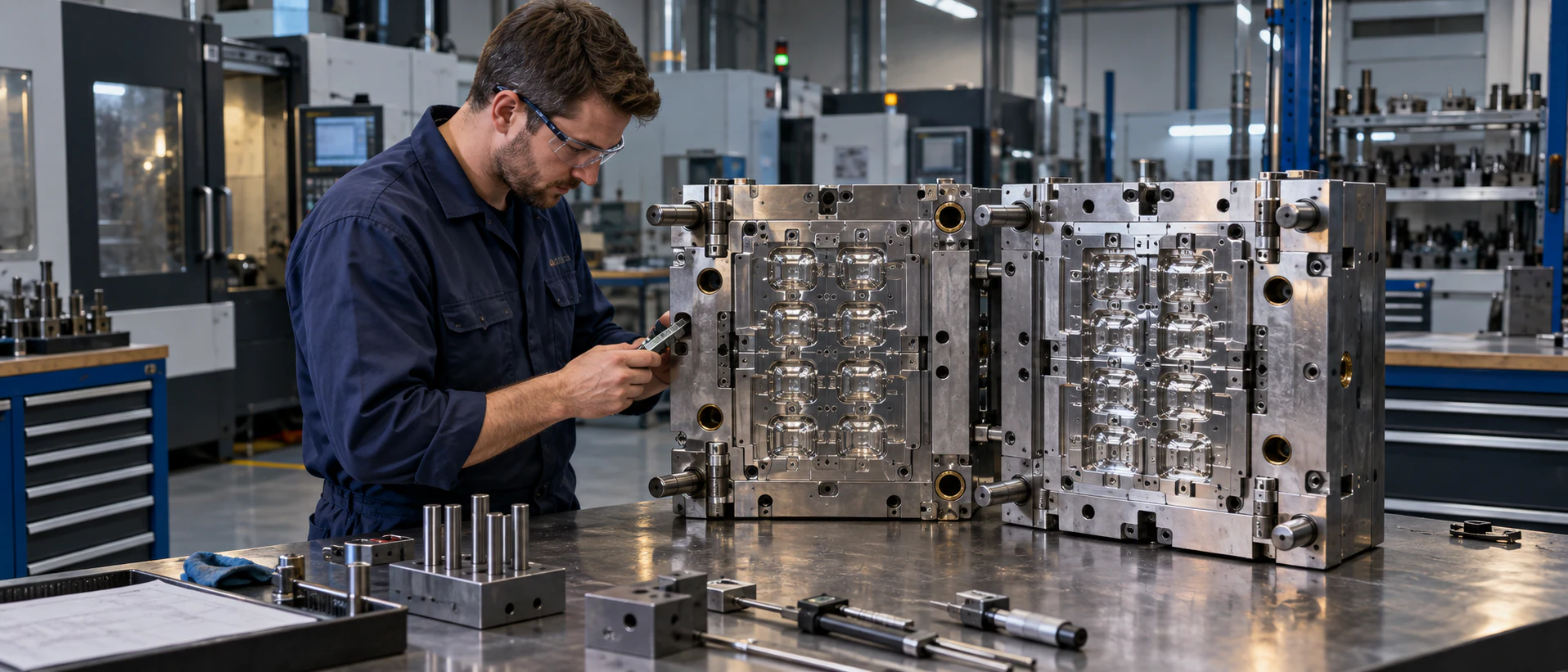
Infinity keeps mold maintenance, repair, engineering changes, and production feedback connected on its Mount Vernon campus.
Control at the toolFour connected disciplines
On-site mold maintenance protects uptime, quality, and tooling value
Instead of separating tool care from production, Infinity keeps each discipline in one visible loop beside molding, engineering, and quality.
Inspect
Review mold condition, moving components, vents, surfaces, and wear indicators before they become production problems.
Maintain
Planned cleaning, servicing, and component attention support stable operation across the mold’s production life.
Repair
On-site technicians address damaged or worn features without first sending the tool away from the manufacturing team.
Document
MoldTrac records help preserve maintenance and repair history so the next decision starts with useful context.
Toolroom capabilityEquipment + experience
A 4,000-square-foot toolroom supports mold repair, maintenance, and engineering changes
Infinity’s on-site team combines journeyman toolmaking knowledge with machining, cleaning, inspection, and documented tool history.
EDM
Focused capability for intricate mold features and controlled corrective work.
Cold Jet dry ice blasting
Cold Jet dry ice blasting supports quick cleaning of production molds.
Surface grinders
Precision surface work helps restore fit and condition where controlled contact matters.
Mills + lathes
Bench mills and lathes provide flexible support for repair and change activity.
Ultrasonic cleaning
Controlled cleaning supports vents, surfaces, and components without turning the work into an off-site handoff.
MoldTrac database
Maintenance activity and tooling history remain accessible to the people making the next production decision.
Preventive maintenanceInteractive care trace
Cycle-based preventive maintenance keeps mold condition visible before production is at risk
Select each stage to follow how inspection, cleaning, corrective work, and documentation create a repeatable mold-care rhythm.
Condition review
Start with the mold’s condition and production history
Cycle history, recent performance, vents, surfaces, moving components, and known wear points frame the work before the mold is serviced.
- Review maintenance history
- Inspect wear-sensitive features
- Connect observations to production feedback
Repair + engineering changesShorter corrective loop
On-site mold repair and engineering changes shorten the path back to controlled production
When a pin, gate, vent, surface, or component needs attention, the tool can move directly from the press to the people equipped to evaluate it.
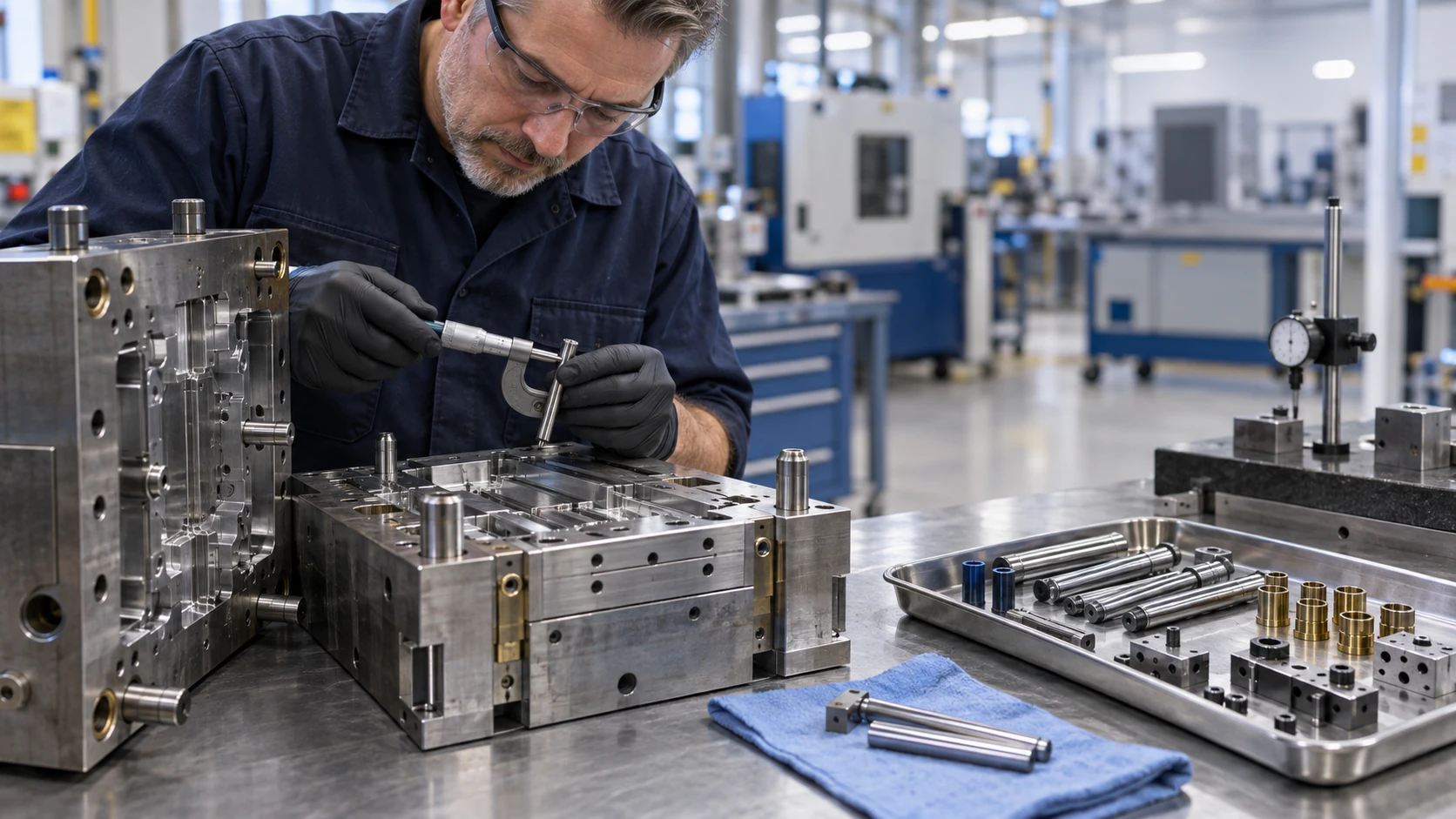
Remove the shipping delay from the first response
On-site capability allows the initial inspection and corrective plan to begin without packaging and sending the mold away.
Adjust the tool with production intent still visible
Targeted changes can be reviewed alongside the component, process conditions, and the requirement that prompted the change.
Measure, document, and reconnect the mold to production
Toolroom work feeds back into processing and quality so the corrected asset returns with shared context.
Protect the assetProduction value over time
Tool condition influences uptime, part quality, and total program cost
The injection mold is a long-term production asset. Consistent care helps preserve its function while reducing avoidable disruption, scrap, and emergency intervention.
Planned care reduces avoidable interruptions
Routine attention makes mold condition part of production planning instead of only an emergency response.
Stable tooling supports a stable molding process
Clean vents, sound components, and controlled surfaces help the process continue producing the approved result.
Maintenance protects the tool’s useful production life
Documented service and timely repair preserve knowledge around a capital asset that may support a program for years.
Controlled intervention limits avoidable downstream expense
Proactive attention can reduce the scrap, expedited service, shipping, and schedule pressure associated with emergency repair.
One manufacturing systemToolmakers + process technicians
Tooling and processing teams solve mold issues with the production result in view
Fast access matters most when the technical disciplines also share context. Infinity connects design intent, tool condition, process behavior, and validation evidence.
Engineering & DFM
Part geometry, material behavior, and mold strategy establish the production target.
In-house toolroom
Inspection, maintenance, repair, and changes protect the mold that creates the component.
Injection molding
Technicians connect tool condition with press settings, automation, and observed part response.
04 Release evidenceValidation + quality
Process and dimensional evidence confirm that corrective work supports repeatable production.
Mount Vernon supportOn-site + established partners
Mount Vernon tooling support connects on-site control with trusted tool sources
Infinity’s toolroom handles production-focused work on campus and maintains relationships with local and broader tooling sources when a program requires additional scope.
Protect productionStart with the mold
Put a production-minded tooling team around your mold’s complete service life
Share your tooling requirements, maintenance needs, engineering change, or transfer program. Infinity can help connect the mold to the manufacturing plan around it.