
How we work Program pathway
A connected injection molding path from concept to production
Infinity brings program management, engineering, tooling, validation, molding, assembly, and quality into one coordinated manufacturing path.
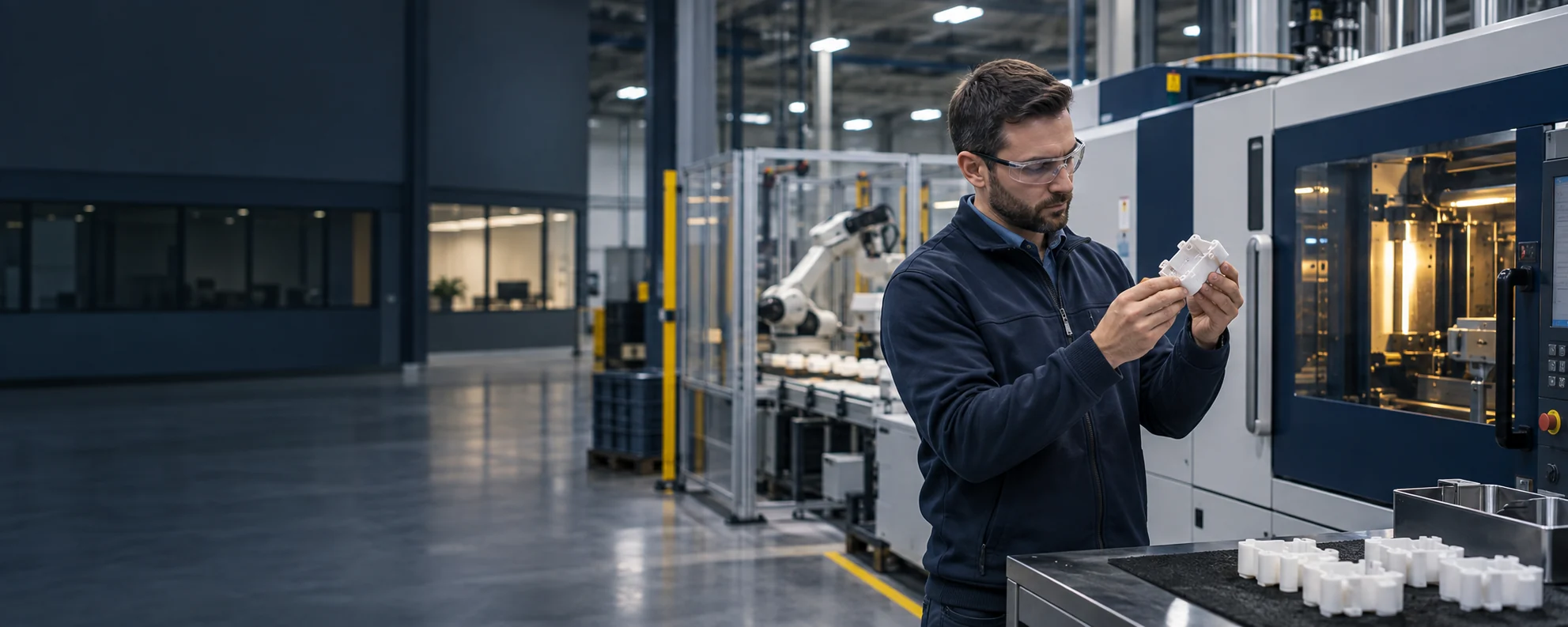
Start with the requirementProgram alignment
Strong molding programs begin with a clear technical brief
Before recommending a resin, tool strategy, press, or validation path, the team aligns on what the part must do, how it will be evaluated, and what the program must sustain.
Part intent
Geometry, interfaces, tolerances, and cosmetic expectations
Service conditions
Heat, chemicals, load, wear, appearance, and sterilization exposure
Technical and commercial requirements stay visible as the program moves between disciplines.
Quality evidence
Critical dimensions, inspection methods, records, and release criteria
Program fit
Annual demand, launch timing, packaging, logistics, and lifecycle needs
- Part data
- Material or performance target
- Expected volume
- Desired timing
Seven connected gatesOne accountable path
Each handoff advances the program with control and context
A dedicated program manager coordinates communication between Infinity, the customer, and involved suppliers while technical teams stay close to each decision.
Select a gate to inspect the work, evidence, and next handoff.
Arrow keys also move through the routeRequirement alignment
Define what success must look like before choosing the manufacturing path.
Part intent, operating conditions, quality needs, demand, and timing are brought into one working brief.
- Application and risk review
- Known requirements and open questions
- Initial fit and next-step alignment
Engineering review
Connect part design, resin behavior, tooling, and production before steel is committed.
Cross-functional review identifies manufacturability risks and shapes a practical route for the part and program.
- Design-for-manufacture guidance
- Material and process considerations
- Tooling and automation concept
Tool realization
Translate the approved strategy into a production tool built for repeatable performance.
Infinity manages tool development, review, sampling, engineering changes, and readiness with long-term maintenance in view.
- Tool design coordination
- Sampling and issue resolution
- Maintenance access and lifecycle planning
Process validation
Build a stable process window and the evidence needed to release the program.
Scientific molding, dimensional verification, and required validation records connect the approved tool to controlled production.
- Process-window development
- Dimensional and visual evidence
- Customer-specific release requirements
Production handoff
Ready the press, automation, quality controls, material flow, and people as one system.
Launch planning turns the validated process into a repeatable operating routine with ownership at every handoff.
- Cell and automation readiness
- Work instructions and controls
- Production and quality handoff
Connected production
Mold, inspect, assemble, finish, package, and fulfill around the program requirement.
Production runs within the focused environment and quality framework that fit the application, from industrial molding to cleanroom work.
- Controlled molding and inspection
- Value-added operations as required
- Packaging and delivery coordination
Lifecycle support
Use production evidence to protect supply and keep improving the operating system.
Process monitoring, preventive maintenance, engineering support, and responsive communication continue after launch.
- Performance and trend review
- Tool and equipment maintenance
- Change management and improvement
Decide before steelCross-functional review
Front-load the choices that become expensive to change later
Engineering, quality, tooling, and production review the same part through different lenses—then resolve competing needs before they become launch problems.
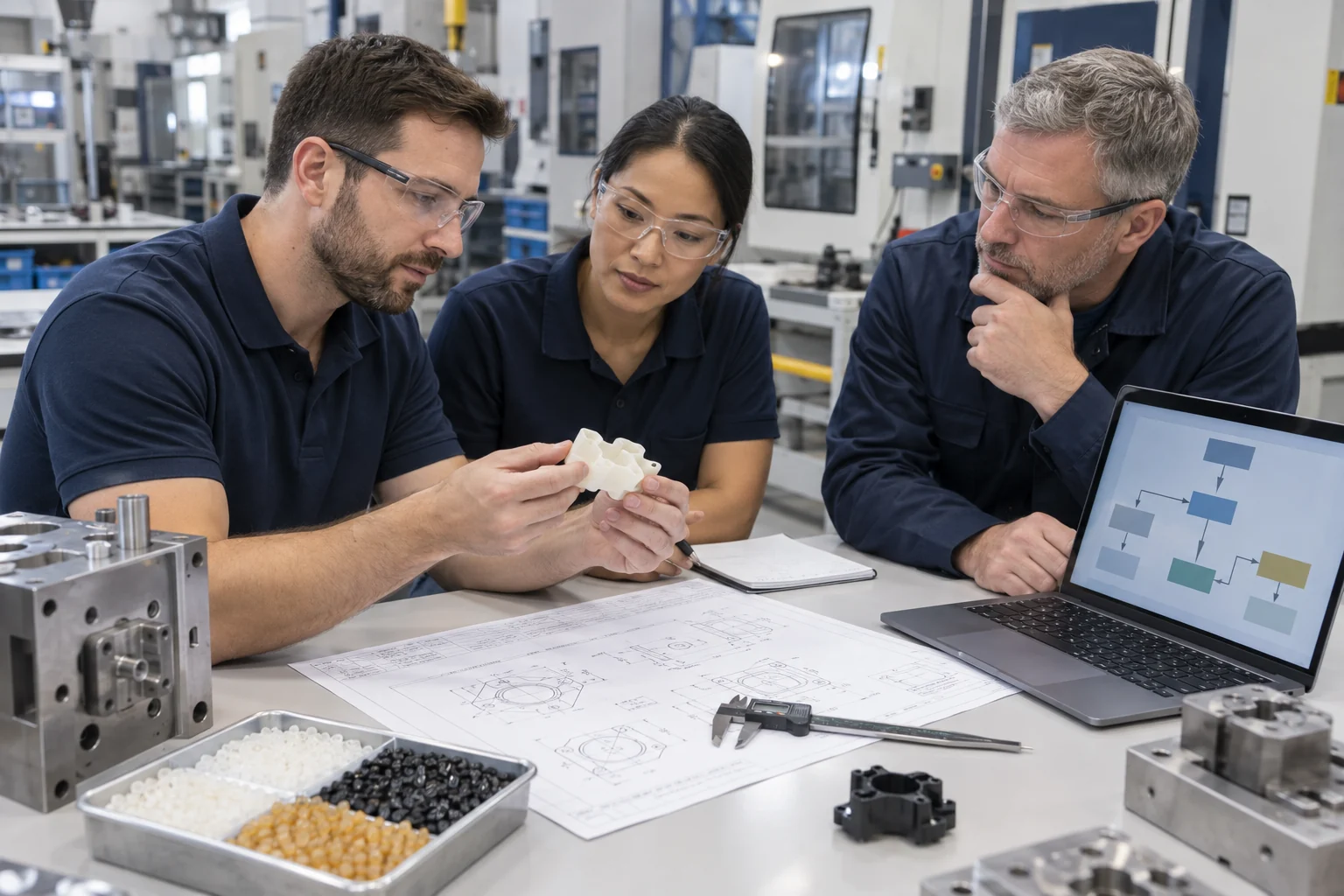
Can the part fill, cool, release, and hold the requirement?
DFM review connects critical features and tolerances to the realities of molding and tool construction.
Does the resin fit the real operating environment?
Performance, processability, availability, and cost are considered together—not as separate decisions.
How will the team know the process is ready?
Inspection, validation, documentation, and release expectations are planned before production handoff.
Quality travels with the programEvidence architecture
Quality is built into every decision—not inspected in at the end of the line
The quality system connects requirements, process development, measurement, traceability, and release evidence across the program lifecycle.
Translate customer criteria into the quality planning and production framework.
Establish a repeatable process window and required validation evidence.
Use on-site CMM, vision, and inspection capability to turn dimensions into decisions.
Connect controlled evidence and traceability to the program’s release requirements.
One Mount Vernon campusTwo focused environments
Specialized facilities stay connected by the same program team
Automotive, industrial, consumer, and medical work can move through the environment that fits its controls while shared expertise remains close to the program.
Main manufacturing plant
Engineering support, tooling, automated molding, inspection, and value-added operations for demanding production programs.
- All-electric molding platform
- In-house toolroom support
- Automation + inspection
Dedicated cleanroom facility
ISO Class 8 cleanroom molding and white-room assembly supported by focused contamination controls and ISO 13485 systems.
- Four cleanroom presses
- Assembly + final pack
- On-site particle monitoring
After launchProduction lifecycle
Stable production is maintained through a live improvement loop
Launch is not the end of the process. Production information feeds maintenance, engineering, quality, and communication throughout the life of the program.
Evidence moves to the people who can act on it.
Read the process
Inspection, process information, and delivery signals reveal where attention is needed.
Protect the assets
Preventive maintenance supports tools, presses, automation, and production-critical systems.
Improve the work
Engineering and operations evaluate practical ways to strengthen repeatability and efficiency.
Keep context moving
Program management coordinates changes, priorities, suppliers, and customer communication.
Bring the next program into focusProject intake
Start with the requirement. We will help map the manufacturing path
Share what you know today—whether that is a drawing, an existing tool, a performance problem, or an early application concept.
- 01Part information
Drawing, model, sample, or existing tool details
- 02Performance needs
Material, environment, tolerance, and quality requirements
- 03Program profile
Demand, timing, packaging, and delivery expectations
- 04Current challenge
Known risks, supply concerns, or improvement targets