
Automation systems Mount Vernon, Indiana
Automation systems coordinate molding, handling, inspection, and assembly
Infinity combines advanced robotics with skilled human expertise to build repeatable production flows around the part, process, quality plan, and program goals.
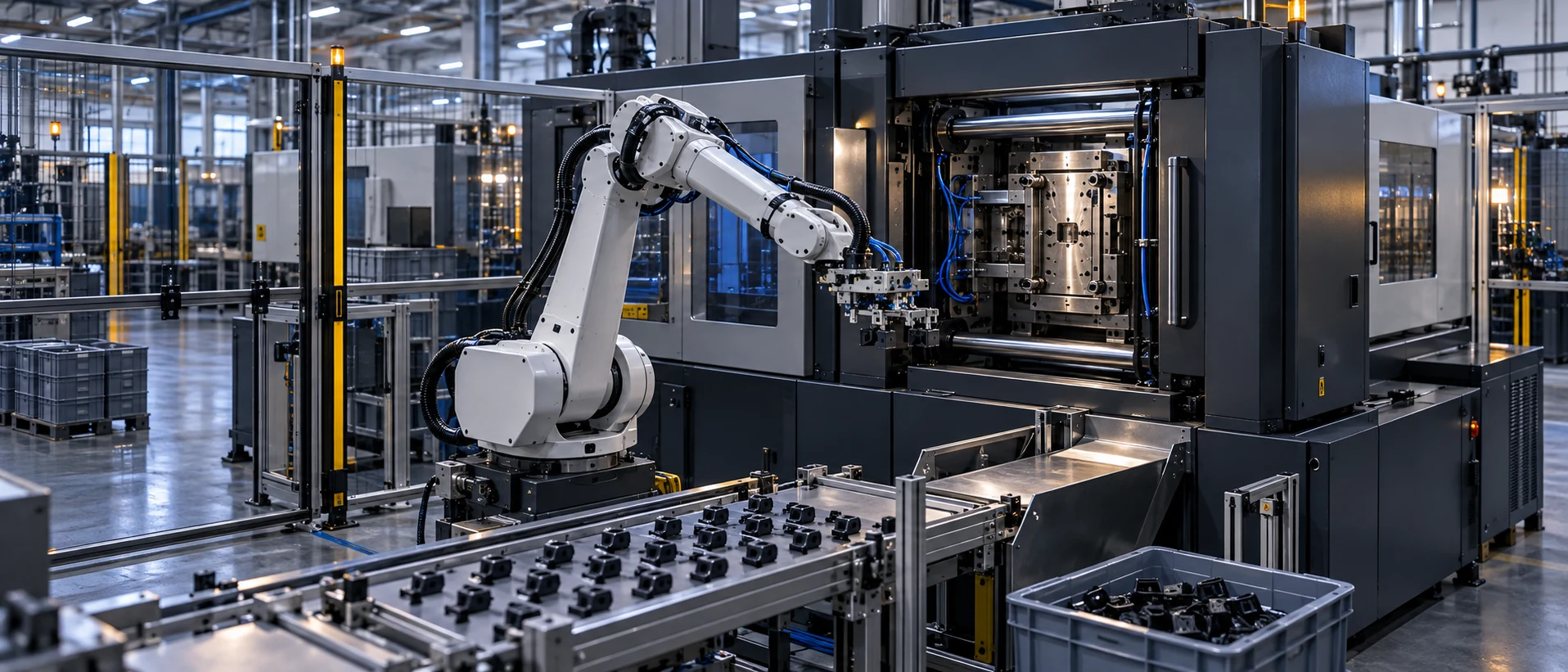
Move each component through the right task, at the right moment, with a clear handoff to quality and people.
- 01MoldControlled cycle
- 02HandleRepeatable motion
- 03VerifyVision + inspection
- 04RouteNext operation
Built around the workPart-led system design
Part-led automation strategy aligns tooling, material behavior, quality checks, and production rate
Useful automation begins with the manufacturing requirements—not a predetermined machine. Infinity evaluates the complete production path so equipment and people solve the right problem together.
Part risk, process behavior, required output, and downstream work establish the cell concept.
Part requirements
Features, handling surfaces, cosmetic expectations, and orientation needs shape the end-of-arm and fixture strategy.
Process behavior
Cycle sequence, ejection, resin behavior, and mold access define how automation enters and exits the press.
Quality plan
Inspection points, defect risks, and part protection determine where verification belongs in the flow.
Production goal
Required output, labor strategy, packing, assembly, and changeover needs keep the system commercially practical.
Cell choreographyInteractive production sequence
A synchronized automation cell turns every molding cycle into a controlled production sequence
Explore how one part can move from the open mold to a protected downstream handoff. The actual sequence is engineered around each program.
Extract without disrupting the cycle
The robot enters at the planned moment, grips the component at defined contact points, and clears the mold for the next controlled cycle.
- End-of-arm tooling fits the part geometry
- Motion is coordinated with mold and press access
- Part surfaces stay protected during transfer
Technology + talentPurpose-built motion
Industrial robots and collaborative automation put repeatable motion where it adds value
Infinity uses robotics technologies from Yushin, Stäubli, Star Automation, Rethink Robotics, and Universal Robots across its manufacturing operations. Equipment selection follows the application, environment, and production objective.
Consistent handling
Repeatable paths support predictable placement, orientation, separation, and transfer from cycle to cycle.
Controlled contact
Grippers and fixtures can be designed around critical surfaces and part geometry instead of relying on uncontrolled drops or bulk movement.
People solve exceptions
Automation manages planned motion while experienced team members focus on process judgment, problem-solving, changeovers, and improvement.
Electronic vision + inspectionQuality inside the flow
Electronic vision inspection verifies critical features without breaking production flow
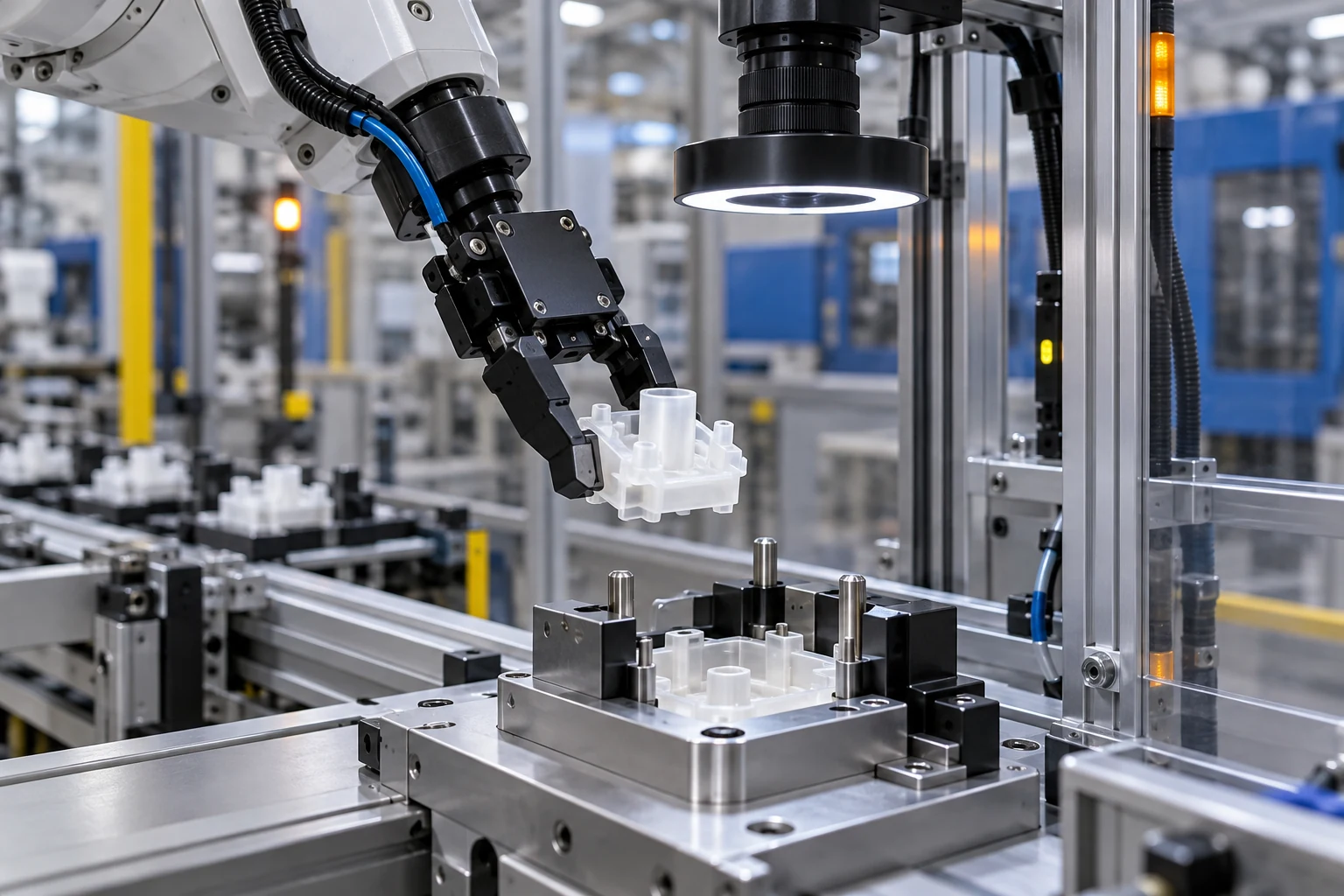
Infinity uses electronic vision and inspection systems to help maintain part quality. Integrating a planned inspection point can keep verification close to the same repeatable motion that presents each component.
Control the view
Fixtures and robotic motion present the component in a repeatable position for the intended check.
Check the right feature
The quality plan determines what the system evaluates and how the part proceeds after inspection.
Route with purpose
Accepted parts can continue to packing or assembly while exceptions move into a controlled review path.
Beyond part removalDownstream value
Automated handling connects molded components to assembly and secondary operations
A useful cell can do more than remove parts. Infinity can connect molding to downstream operations so orientation, protection, inspection, and handoff are planned as one manufacturing system.
Assembly support
Present, fixture, and transfer components through program-specific assembly steps.
Secondary processing
Coordinate handling around laser marking, pad printing, welding, or other required operations.
Packing + transfer
Maintain orientation and part protection as finished components move to the next controlled handoff.
Specialized production settingsOne integrated campus
Automation architecture adapts to cleanroom, automotive, and industrial production
Infinity’s two specialized facilities share one Southwest Indiana campus. Automation can be configured around the requirements of each manufacturing environment and the controls of the program it supports.
ISO Class 8 cleanroom production
Controlled handling and automation can support molding and white-room assembly requirements in Infinity’s dedicated medical facility.
AutomotiveHigh-tolerance production programs
Robot-equipped all-electric presses and connected quality systems support demanding production and delivery expectations.
Industrial / consumerFlexible OEM manufacturing
Industrial robots, collaborative automation, and program-specific fixtures support repeatable tasks and varied downstream needs.
Connected executionFour disciplines / one result
Engineering, tooling, quality, and operations keep automated production connected
Automation works best when the people who understand the part, mold, process, and evidence can solve problems together. Infinity keeps those disciplines close on one campus.
-
01
Define
Engineering & DFM
Review geometry, resin, risk, and production intent before the cell path is fixed.
Explore engineering -
02
Integrate
Tooling + molding
Coordinate access, ejection, gripper contact, and cycle timing beside the production mold.
Explore tooling -
03
Prove
Quality + validation
Align inspection logic with the documented process and the component’s critical requirements.
Explore validation -
04
Improve
Production operations
Use operator experience and production feedback to maintain and improve the complete flow.
See how Infinity works
Build the automation briefPart / process / proof
Start automation planning with the part, risk, and required output already defined
Share your component files, resin, production expectations, inspection needs, assembly steps, and current manufacturing challenges. Infinity can help frame the automation opportunity around a complete molding program.
- 01Part geometry + resin
- 02Annual volume + cycle target
- 03Inspection + handling risks
- 04Assembly + packing requirements