
Capability sheetWorking manufacturing reference
Injection molding capability organized for real program decisions
Review Infinity’s molding range, cleanroom capacity, engineering resources, material experience, automation, tooling, metrology, and certified quality systems in one connected reference.
Connected capability mapSix working disciplines
See how each capability supports the complete production system
Equipment is only one part of the picture. Select a discipline to see the people, controls, and technical resources that carry a program from review into repeatable production.
Select a discipline. The reference card and system map update together.
Arrow keys move through the mapCustom injection molding
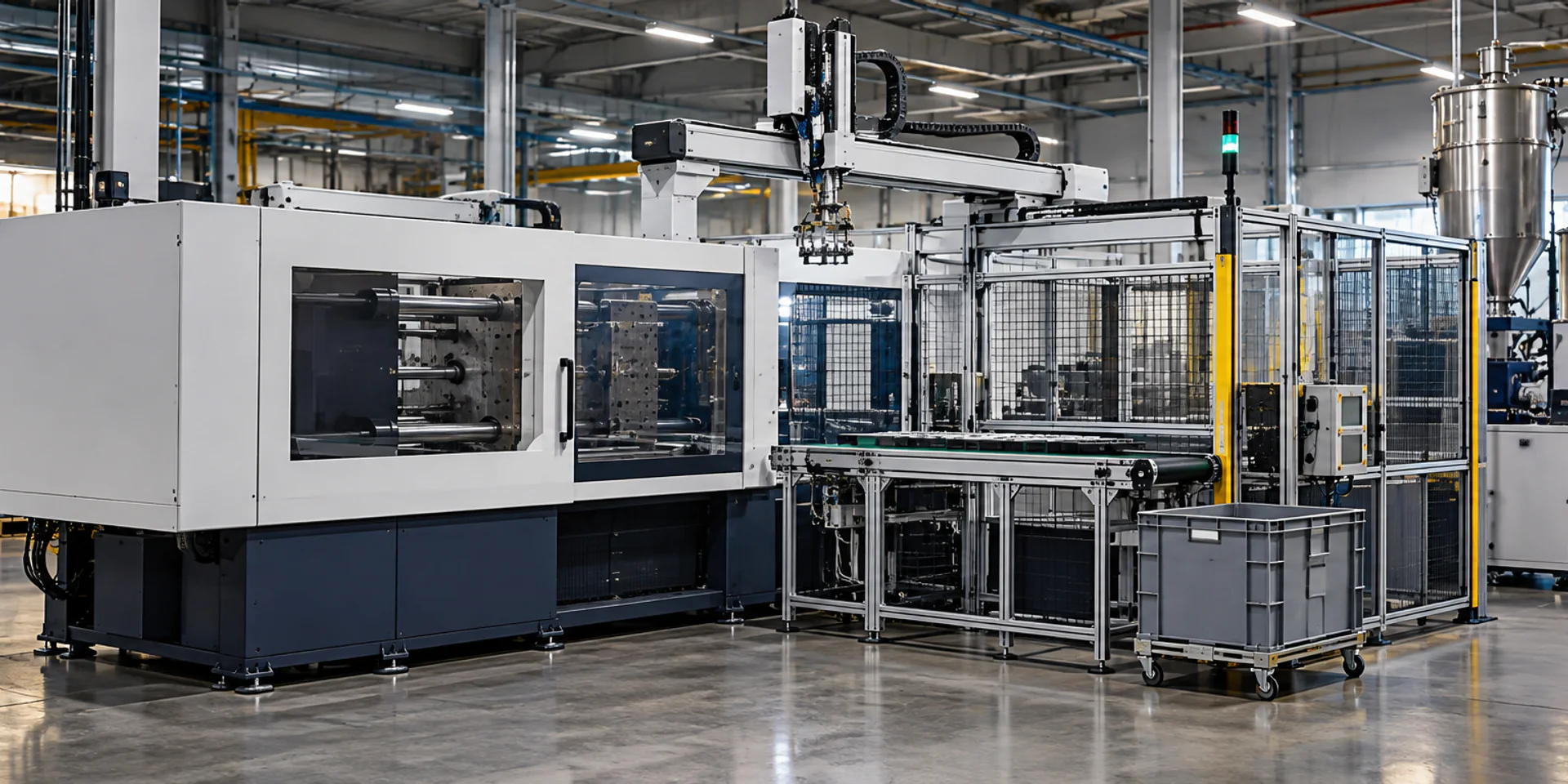
All-electric precision across a 55–500 ton production range.
Infinity supports complex geometries, engineering-grade thermoplastics, high-heat processing, and controlled molding environments with production discipline built around the part.
- 30 all-electric presses
- Scientific process development
- Automotive, medical, industrial, and consumer programs
Engineering + DFM support
Part, resin, mold, process, and inspection decisions are reviewed together.
Early collaboration helps identify manufacturability risks, clarify service conditions, and align the design with a practical production and validation path.
- Material selection support
- Design-for-manufacture review
- Process and tooling optimization
In-house tooling support
Tool care stays close to the people running and measuring the process.
On-site preventive maintenance, repair capability, engineering changes, and established local tool partners shorten the corrective loop around production molds.
- Preventive maintenance
- Repair and engineering changes
- Rapid local tooling support
Automation systems
Automation is designed around repeatability, handling, inspection, and output.
Robotics and purpose-built cell functions connect part removal, movement, verification, and downstream work to the approved molding process.
- Robotic part handling
- Electronic vision and inspection
- Integrated production cells
Validation + metrology
Material identity, process evidence, measurement, and traceability stay connected.
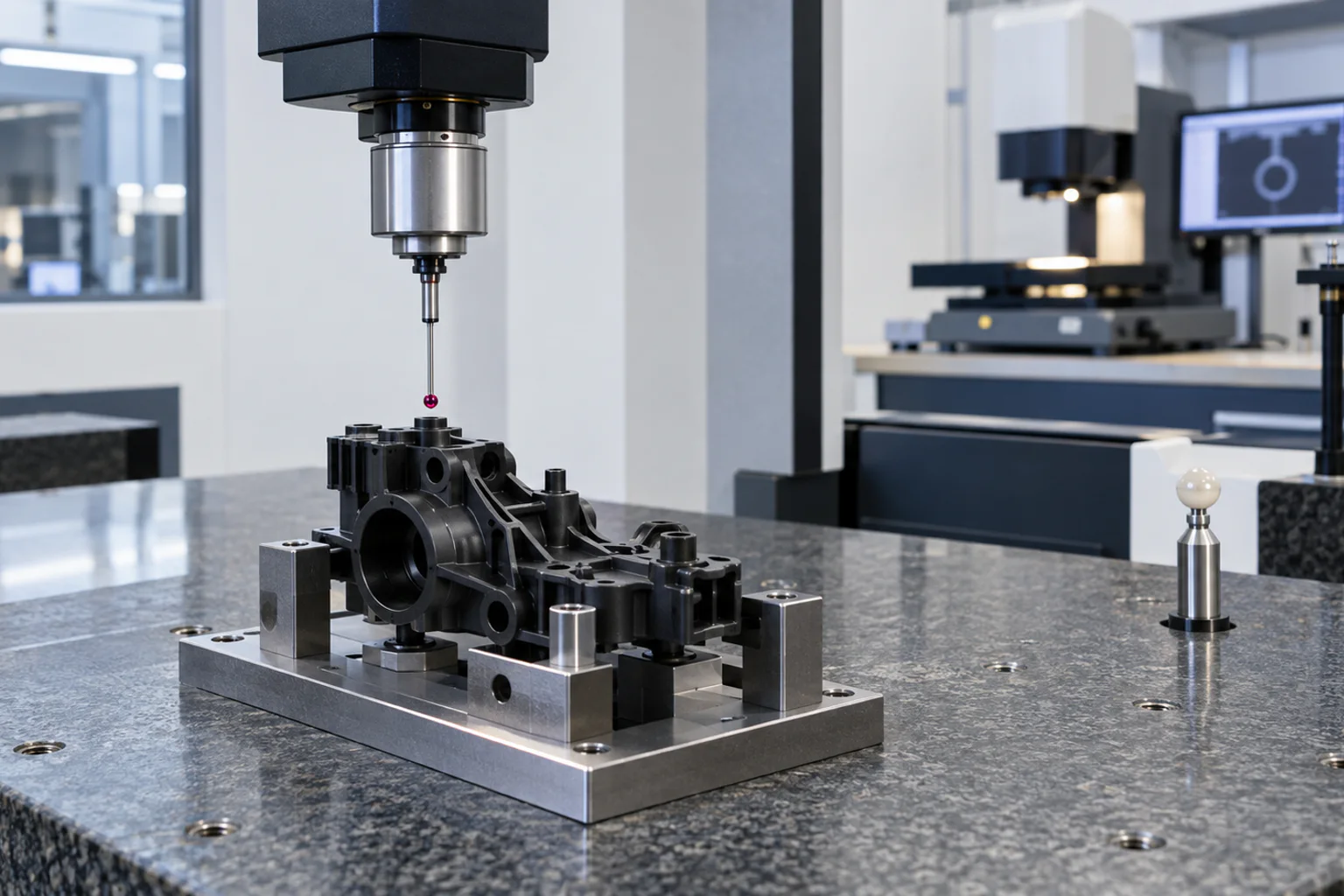
Scientific molding, incoming FTIR verification, CMM and vision inspection, documented validation, and certified systems support controlled release.
- FTIR scanning on incoming resin lots
- CMM and vision measurement
- Validation and traceability records
Assembly + secondary operations
Value-added work can remain beside molding, inspection, and program support.
Secondary assembly, controlled-environment work, packaging, and connected quality checks help simplify handoffs between a molded component and the finished deliverable.
- Assembly and subassembly
- White-room assembly capability
- Program-specific finishing and packaging
All-electric press platform55–500 tons
A broad molding range serves both precision and scale
The main manufacturing environment covers 90–500 tons, while the dedicated Class 8 cleanroom supports four presses across a 55–110 ton range.
Electric control supports stable motion and efficient production.
Press selection is aligned with part geometry, material, tool requirements, automation, and the approved process window.
Capacity is matched to the requirement, not treated as a stand-alone number.
Engineering, quality, tooling, and operations help define the cell around the complete manufacturing need.
Engineering resin experienceMaterial-led production
Resin strategy begins with the service condition
Infinity’s capability sheet identifies eight representative engineering material families used across demanding heat, strength, wear, appearance, and dimensional requirements.
Thermal and chemical performance for demanding service environments.
Heat resistance with dimensional and structural performance.
Impact strength with versatile functional and appearance options.
Processability, toughness, and surface quality for broad applications.
Stable electrical and mechanical performance in precision parts.
Durable performance for structural and wear-focused components.
Mechanical strength and temperature capability for engineered applications.
Low-friction dimensional performance for moving and precision features.
One Southwest Indiana campusTwo focused environments
Dedicated facilities stay connected by one short walk
Automotive and industrial production operates beside a separate medical and healthcare environment, keeping specialized controls intact while people and decisions remain close.
90–500 ton production with automation, tooling support, and room to expand.
- All-electric molding platform
- Integrated automation systems
- On-site mold maintenance and repair
An 11,000-square-foot ISO Class 8 cleanroom and white-room assembly environment.
- Four presses from 55–110 tons
- Controlled molding and assembly
- ISO 13485 quality framework
Certified quality + evidenceMeasure what matters
Capability becomes valuable when the result can be verified and released
Certified systems, scientific process development, material verification, on-site measurement, documented validation, and traceability make quality part of the operating routine.
Confirm material identity before production.
FTIR scanning supports incoming resin verification at the lot level.
Develop and validate a repeatable molding window.
Scientific molding connects machine, mold, material, and process response.
Match inspection to the feature and program risk.
CMM, vision systems, and documented methods support consistent results.
Preserve the evidence needed to sustain production.
Records, controls, and continual improvement remain tied to the approved method.
Connected executionFrom question to shipment
Six linked disciplines carry the requirement into sustained production
Open any stage for a deeper view of the people, equipment, controls, and evidence involved. The sequence is connected, but every program is shaped around its actual risk.
- 01ReviewDefine the part, material, service conditions, and evidence.↗
- 02ToolBuild, sample, maintain, and protect the production mold.↗
- 03ValidateEstablish the process window and release evidence.↗
- 04MoldRun the approved process on the matched all-electric press.↗
- 05VerifyMeasure critical output and preserve traceability.↗
- 06CompleteAssemble, handle, package, and deliver around the program.↗
Keep the reference closeCapability + conversation
Download the overview, then bring the actual requirement
The capability sheet provides a concise starting point. A useful program review adds the part, resin or service conditions, annual demand, timing, quality evidence, and open technical questions.